Essay
Is Simulated Death Biologically Bad?
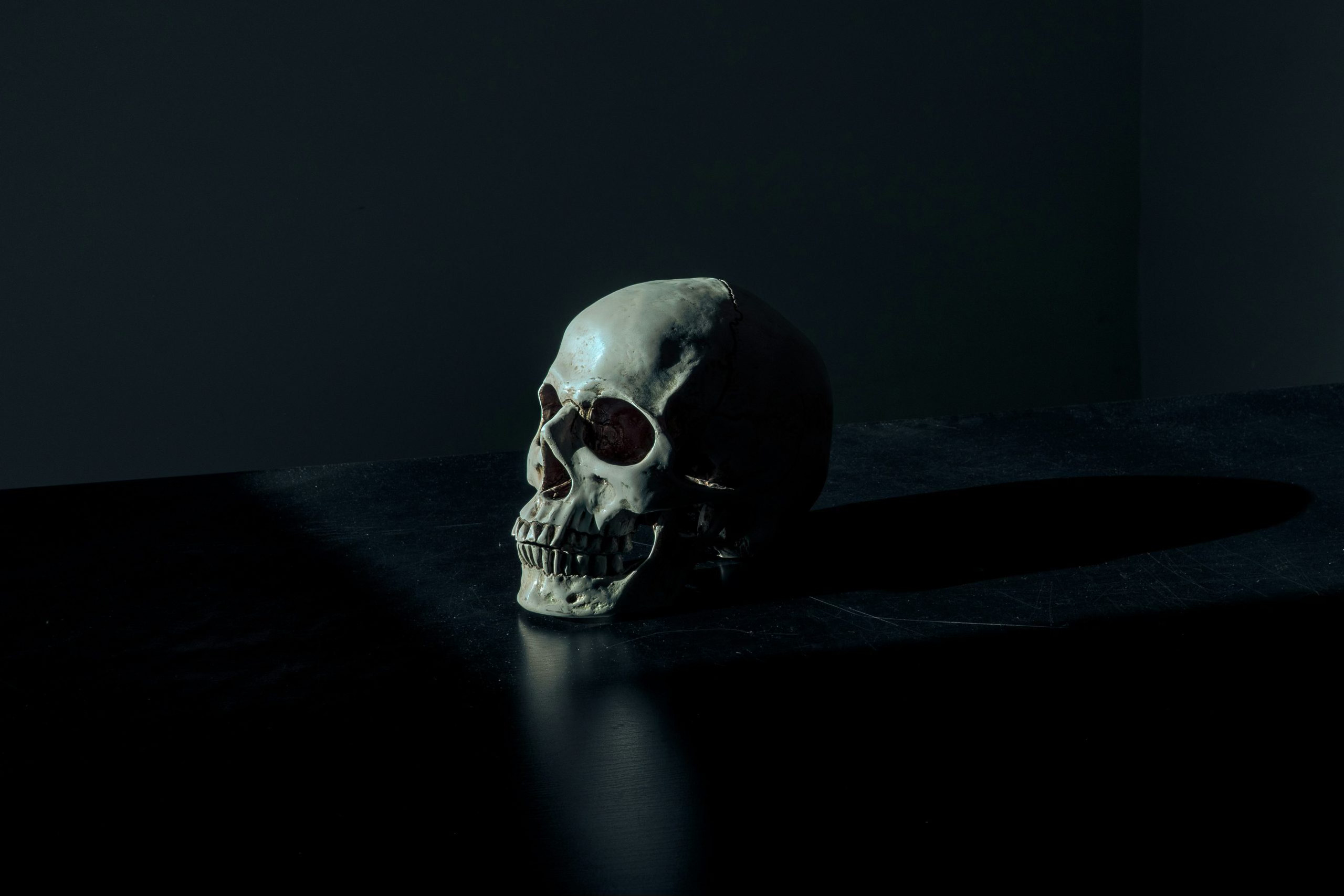
So when I die in a video game, I respawn with no physical health ailments, right? I only ask this question because, to me, it’s beyond obvious. Ditto to anyone else who’s played video games like Call of Duty — or dare I say Outlast Trials, good grief. The point is that we can die as many times as we want and there is no real physical / biological / physiological problem, except for maybe high blood pressure. Could this change with simulated death?
It might go something like this. I put on the Black Mirror-esque device on my temple. You know, the small, grey M&M-shaped thing that somehow induces loss-of-consciousness immediately and puts people into a virtual world almost instantaneously? That one. I also have these biomonitors all over my body to stimulate and simulate those body parts. No, I don’t have any on my crotch…probably not. I load myself into COD, or Battlefield. I have my gun (M416 carbine with a silencer and heavy barrel) and go to work. One down, two down. Headshot. Someone sneaks up behind me and pops one in the back of my cranium. SHUCKS! I respawn and go about my game.
This isn’t a beautifully-written blog post (yet) but it highlights something interesting. Did you see it? I died in game, and my whole body and mind had to have felt it. The game was simulating death, just like it was simulating me carrying the gun, the recoil of the gun after shooting, and the blood splatter of my enemies after annihilating them. Though, somehow, no Science-Fiction depicts actual biological consequences from dealing with simulated death. Why is this?
Screens alone can traumatize us. I watched the Charlie Kirk assassination video; multiple times unfortunately. This was not simulated, just footage on my phone. My body reacted and I felt horrified, sick to my stomach. I just watched someone get shot in the neck, and even though I wasn’t there, even though it was pixels on glass, my brain didn’t care. The nausea that I had from this experience was real. The spike in heart rate afterwards was concerning. The intrusive thoughts afterwards? I had to take time off work because I was so perturbed. All that from just watching violence from a safe distance through a screen.
The science backs this up. There’s a Psychology Today article that breaks down exactly what happens when you witness violence, even secondhand, even through media. When you witness cruelty and empathize with the victim, you experience the trauma vicariously. That’s why witnesses to violence are considered victims too. Your brain doesn’t need you to be physically present for the trauma to register. The images get burned in and the emotional toll lingers. If you’re powerless to prevent what you’re watching (like I was, staring at my phone screen) it’s particularly traumatizing.
Now scale that up with novel technology. I’m not watching anymore, I’m in it. I am it. The biomonitors are feeding my nervous system the sensation of holding a weapon, the recoil vibrating through my arms, the environmental sounds in spatial audio. And then I get shot in the head. My brain receives those signals: impact, pain, darkness, cessation. What happens in that moment? Does my brain simply know it’s fake? Does the game not allow for sensations in and around the head? But what about bullets passing by? Where’s the realism in that? The tradeoff is there. Let’s pretend that all sensations are up for grabs. Does my brain process this experience the same way it would process actual trauma?
Procrusteanized to a safety feature? It’s possible that the game developers programmed some failsafe that goes “Hey, brain—relax, you’re not actually dying.” Actually…how would that even work? My brain is experiencing a bullet tearing through my skull, the lights going out, the whole nine yards. You can’t just slap a “NVM” sticker on that and expect my amygdala to chill out. I just got shot in the back of the head for crying out loud. Remember Tom Cruise in the movie “Edge of Tomorrow?” Every time he died he screamed himself awake into his next life; his respawn. Wouldn’t the same thing happen here?
Alternatively — and this is where things get screwy — it’s entirely possible that the simulation isn’t that good. Maybe there’s a hard limit to the simulation. If the game truly made me experience death (let’s also ask the question, what does it mean to experience death mentally as opposed to physically?), my body would respond accordingly. Heart stops. Brain waves flatline. Game over, literally. That means every VR simulation has to have some built-in uncanny valley moment where it talks to your mind and goes “this is death, but also, not really.” This defeats the whole point. If I can tell the difference between simulated death and the real thing, then I can probably tell the difference between simulated everything and the real thing.
What if I can’t tell the difference? If the technology gets so good, will my brain genuinely believe I died? If this happens do I wake up with PTSD? Do I respawn in-game but my real body is seizing on the couch because my brain just experienced its own murder? Does it have the same effect as a near-death or post-death experience? The biomonitors are supposed to simulate sensations, but who’s regulating the “you just got shot in the face” sensation? Is there an FDA approval process for that? “Yes, this product may cause existential dread and a 40% chance of thinking you’re actually dead.”
That same article points out that exposure to violence doesn’t just traumatize you, it can also make you aggressive. Sometimes people don’t empathize with the victim. Sometimes they side with the aggressor. When that happens, they’re more likely to behave aggressively themselves. This is especially true with fictional violence, where the hero wins by being violent. John Wick, anyone? You leave the theater inspired to kick some ass, throw some axes, get a black suit. You probably won’t actually do it (except for the suit hopefully), but now it’s part of your behavioral repertoire. The link between aggressive behavior and exposure to violence is so well-documented that researchers compare it to the correlation between lung cancer and secondhand smoke.
So let’s think about this in VR terms. I’m not just watching a hero punch and shoot his way through a plot. I am the hero. My hands are holding the gun. My body feels the recoil. I’m the one doing the killing. Not only that, I’m doing it dozens, maybe hundreds of times per gaming session. What’s that doing to my mirror neurons? Those are the neurons that let us observe, empathize, and imitate. They’re why you stick your tongue out when a baby does. They’re why you can pick up skills by watching professionals. They’re also why children emulate the violence they see in media and video games. Mirror neurons don’t distinguish between respectful actions and harmful ones; there’s no ethics or morality or cognizance. They just copy what they observe.
If watching violence on a screen can rewire your brain, what does experiencing (and committing first-hand) violence — even simulated violence — do? Especially if you’re doing it repeatedly? The article mentions a study where adolescents with high exposure to media violence showed reduced cognitive brain function. The parts of their brains responsible for thinking, learning, reasoning, and emotional control were less active than in kids with lower exposure. That is just from watching. What happens when the violence isn’t on a screen in front of you, but is happening to you, inside a simulation your brain can’t differentiate from reality?
If watching a real assassination on a screen made me physically ill, what happens when my brain thinks I’m the one being assassinated? We know that the brain doesn’t always distinguish between real and perceived threats. That’s why anxiety exists. That’s why nightmares can wake you up in a cold sweat. That’s why soldiers come back from war with PTSD—not just from physical injury, but from what their minds experienced. The trauma is neurological, not just physical.
So when I die in the simulation over and over (because it’s a game and that’s what you do) am I accumulating micro-traumas? Is each death chipping away at my psyche? The article talks about how children are especially vulnerable because they don’t have the worldview or self-soothing skills to cope with witnessing violence. But what about adults in hyper-realistic VR? Do our self-soothing mantras like “It’s not real, I’m safe” even work when every sensory input is screaming the opposite? Or does the brain adapt, realizing after the tenth respawn that death here doesn’t mean what it means out there? If it adapts, what does that say about death itself? If my brain learns that dying isn’t permanent, that it’s just a loading screen, does that rewire how I process mortality? Do I start treating real death more casually because I’ve died a thousand times in VR and it was fine?
Let’s inject some philosophy into this techno-nightmare of being. Remember the thought experiment from the first day of philosophy class — the brain in a vat? What if you’re just a brain in a jar somewhere, and everything you experience is being fed to you through wires? If that’s true, then this reality could already be the simulation. Suppose you can die infinite times in a video game simulation without consequences, what does that say about death in this simulation? Maybe I’ve already died a thousand times and just don’t remember. Maybe every time I “respawn” here, my memories get wiped. It’s possible that I’m in the longest game of COD ever and someone’s just really good at keeping me alive.
Could death be the one thing you can’t simulate? Not really; death isn’t a sensation. Rather it’s the absence of sensation. You can’t program nothingness into a brain that’s still actively experiencing. That’d be like dividing by zero. The system crashes. Which means either the simulation stops being convincing right before death, or it doesn’t stop at all.
So if you’re dying dozens of times a day in full-sensory VR, what’s happening to your hippocampus? Your amygdala? Your prefrontal cortex? Are you building resilience, or are you just building scar tissue? Are you becoming desensitized to violence; your own death and the deaths you’re inflicting on others? If you’re becoming desensitized, what happens when you take the headset off?
Every time I die in VR and respawn, I’m creating a memory. A memory of dying. A memory of surviving death. My brain encodes that experience — the bullet, the fade to black, the respawn screen, the return to consciousness — and files it away with every other memory I have. Except this one’s a lie.
I didn’t actually die. But my brain doesn’t know that. It experienced all the sensory data of death. It felt the terror, the pain, the cessation. Then it experienced coming back — over and over. A thousand times, maybe more. So now my brain has a thousand memories of dying and not-dying. A thousand false neurons firing in patterns that say “death happened here, and then it un-happened, then it happened again, ad nauseam.”
What does that do to a person? We know that memories aren’t just passive recordings. They’re active, malleable, reconstructed every time we recall them. Every time we reconstruct a memory, we can change it slightly. So if I have a thousand memories of death, and I’m constantly accessing them because I’m playing this game every day, dying every session, then those memories start to bleed into each other. They corrupt and merge with real memories and experiences.
As a hypothetical, if I’m driving to work and someone cuts me off, for a split second, I see the collision coming. My brain, trained by a thousand VR deaths, might flash through those false memories. It’s happened before, right? I’ve crashed before. I’ve died before. Except I haven’t. But my neurons don’t know that. They fire the same pattern they fired in the game. My body tenses. My heart races. I’m waiting for the respawn that never comes because this isn’t a game.
Or maybe it’s subtler than that. Maybe I just start feeling… off. Like there’s static in my head. I’m at dinner with friends, and someone’s telling a story, and I’m nodding along, but part of my brain is cataloging which death this reminds me of. The time I fell off a building in the game. The time I drowned. The time I burned. None of those things happened to me. But my brain has the memories. The neural pathways exist and they’re competing with my real memories for processing power, for emotional weight, for meaning.
How does my brain distinguish between the memory of my grandfather’s funeral (a real death, a real loss) and the memory of my two hundredth VR death last Tuesday on Arrakis fighting with the Dune characters? Both are filed under “death.” Both triggered an emotional response. One matters, and one doesn’t. However, my brain doesn’t inherently know which is which. I have to consciously remind myself. “That one was real. That one wasn’t.” Having to do that every time, having to fact-check my own memories against reality, what happens when I forget? What happens when the sheer volume of false death-memories drowns out the real ones?
On the other hand, if I die a thousand times and come back a thousand times, my brain starts to encode a pattern. Death is temporary. Death is reversible. Death is just a transition state. Death is not real. That’s the lesson my neurons are learning. Once that pattern is established, after these new pathways are worn deep from repetition, they don’t just stay in the game. They generalize into my consciousness and overall brain architecture. That’s what neural networks (biological) do. They find patterns and apply them broadly. So when I think about my own mortality, does my brain even take it seriously anymore? I know intellectually that real death is different. On a neurological level, on the level where fear and survival instincts live, I’ve trained my brain to treat death as a minor inconvenience.
Dr. Sheldon Solomon and his colleagues spent decades studying what they call “the worm at the core,” the idea that awareness of our own mortality is the driving force behind almost everything humans do. We build civilizations, create art, chase fame, have children, believe in God(s), all because we know we’re going to die. Terror management theory says that this knowledge is so unbearable that we construct elaborate psychological defenses against it. We invest in cultural worldviews that promise symbolic immortality. We strive for self-esteem because it makes us feel valuable, lasting, significant. We do all of this to manage the terror of death.
Acknowledging this, what happens when death stops being terrifying? Not because we’ve made peace with it. Not because we’ve found some enlightened acceptance. Simply because we’ve died so many times in VR that the existential weight of it has been completely hollowed out. The worm at the core, that deep, primal knowledge that we will someday cease to exist, gets replaced with a shrug. A “yeah, I’ve done this before.” A “I’ll just respawn.” What happens when an entire generation grows up with the neurological pattern that death is temporary, reversible, no big deal? Do we stop building? Stop creating? Stop caring about legacy?
Maybe we keep doing all those things, but they stop meaning anything. We still go through the motions of culture and connection, but the existential urgency is gone. We’re just existing. Pseudo-philosophical zombies. Collecting achievements: increasing body count, bank account, bloodline amount. Who cares? Nothing feels real. This, in all honesty. might be the real horror here. VR death could remove the very thing that makes us human — the knowledge that our time is limited, that our choices matter, that this life is the only one we get; impermanence. We’ll still be alive, still be conscious, still be walking around. But the part of us that knows how to care about being alive? That might be the first casualty of simulated death.
And maybe that’s the real worm at the core.