Essay
The Seven Deadly Sins of Modernity
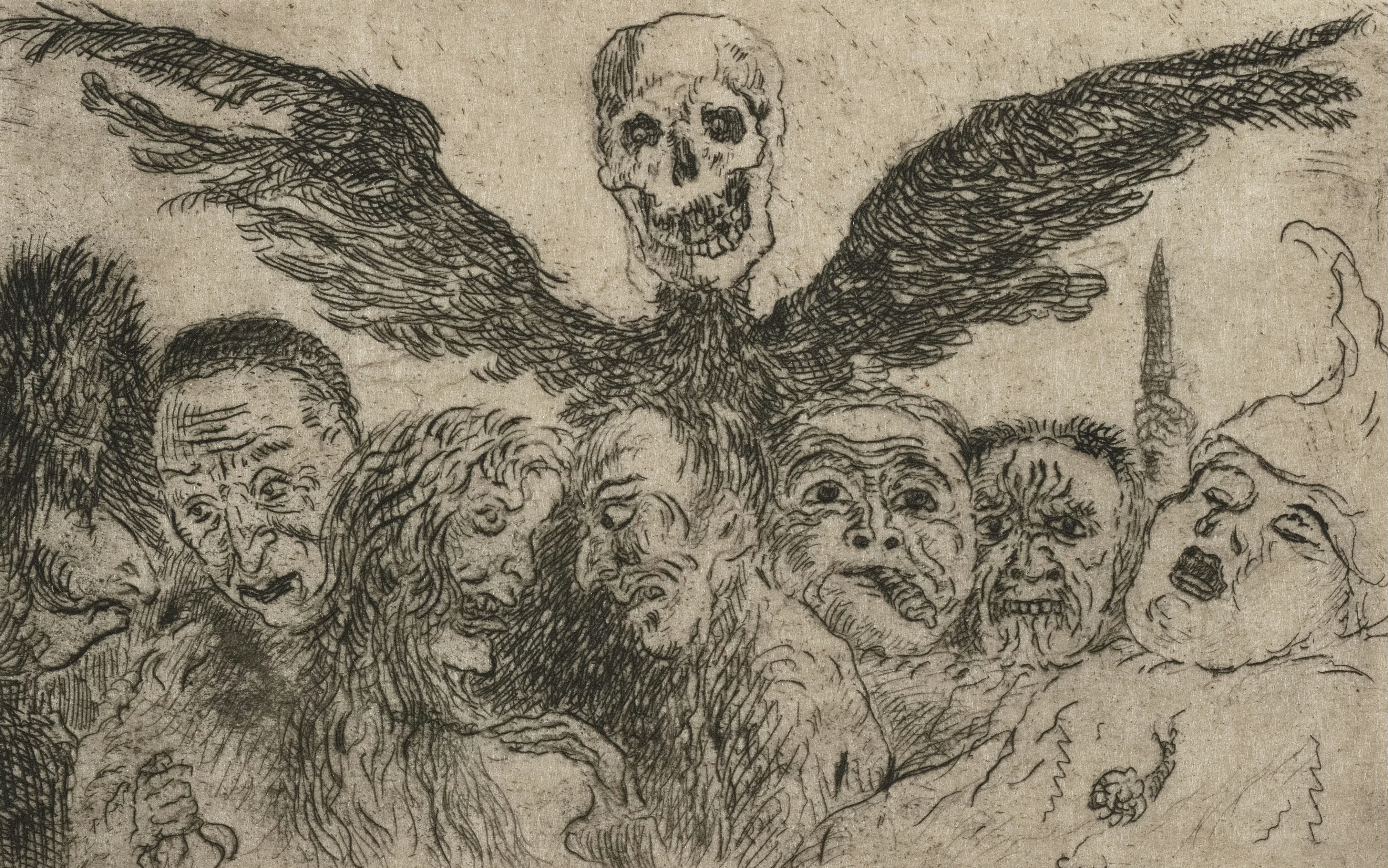
Pride: Influencers
Those that wield influence, or want to wield influence, are negative Nancie’s in my book. There is no influence without corporate interests and greediness. Not because it’s impossible morally, but because it’s simply not feasible for online platforms to allow any random person a smidgen of influence/power if they aren’t abiding by their rules and expectations. This isn’t a conspiracy or jealousy. It’s simply the way the industry works. Influencers gain popularity and eventually sell their time and influence to the companies that pay. The influencers advertise shitty products and services that fuck over their followers for a few bucks. And they brand themselves holier than thou? Go fuck yourself. Prideful idiots at their finest.
Apologies for my anger. I need not resort to vitriolic words of contempt and rage. This turns people away from the point I am trying to make, I understand. But are you not angry with me? Do you not cringe at the folks on the street recording themselves dancing in the middle of the hordes of pedestrians trying to get from A to B, or Y to Z? Do you not find it annoying that at any moment, in any interaction, you can be approached by a random stranger who has a taste for influence, and made the butt of a poorly-thought-out joke that ends up going viral and costing you your job because of your reaction or non-reaction? Are you not annoyed that every point in society has some person trying to influence you on something, make money off you, consume your time and attention for their own personal gain?
No, I don’t want your book, or your course, or your life advice. Not yet, at least. Get to know me first and then MAYBE. Why would I give you my money and time due to the number of followers you have on social media? Is that a serious argument, a valid criterion of social status? I refuse to accept these circumstances. I have some friends who are influencers or who want to be influencers. I respect them, as humans; not for wanting to influence. The argument is still unclear to me no matter how much I question their motives. Everyone says it’s intrinsic, but then bring up money, power, fame, status. THESE ARE NOT INTRINSIC MOTIVES! They say that these are just extras on top of the cake. Then why do you use them as markers of success? The arguments fall flat when poked just a little bit.
Influencing is the top job for youth. Above the For All Mankind astronauts and Greys Anatomy doctors and Harvey Spector lawyers and the traditional icons of culture. Nope, these jobs do not reign supreme anymore. The most-wanted occupation is a pseudo-occupation: the influencer. I am not being mean by saying “pseudo-“ I am being literal. This isn’t a job because it doesn’t make money if you aren’t an elite in the field. Only a fraction of creators actually make money, and of those who do, it’s less than $15k USD per year. A complete and stark departure from the prophesied tens of thousands per month that people discuss as if that is the default state of income for modern influencers.
Then you have the exploitation of the Self or of Others, usually kids or spouses. With influencing, child labour goes out the window. Kids are farmed (I do not mean this metaphorically, I mean this literally; some children are being born literally and purposefully for content — some children’s lives are so cyberspace-focused, that they have existed in cyberspace longer than on Earth, because the process of pregnancy was documented by the parents) and used for engagement and content. There is no privacy here, only punishment. This transcends into the punishment of the Self, where lower views and likes and followers cause quite a ruckus for influencers. It causes them to pursue harmful actions, which somehow increase engagement, driving them to prolong the harmful actions or develop a narrative to justify the drama, giving them a quasi-chaotic personality and harming their self-image, self-esteem, self-worth completely.
Again, I must ask you: is this what we consider influence….or healthy…? The influencer dream is a lottery ticket. And you are not a lottery ticket.
Greed: Money
I remember when I could have $200 in my bank account and feel at peace. Not anymore. Everything costs money and prices increase arbitrarily. Having $200 in my bank account wouldn’t last me a week with groceries. Living is expensive, it seems.
Look at any facet of society and you will find a predisposition for money. Maslow’s base physiological needs see a mere two (sleep and breathing) as non-monetizable — yet. The rest, shelter, food, and water, are almost certain to cost some cash. Sometimes, water is free, but regular water is not. Shelter is clearly never free, unless you are talking about loitering or actual homeless shelters. And, of course, food is quite, quite expensive. Even when the other base physiological needs are met, food continues to be the bane of most people’s existence. Almost every political cycle focuses on grocery prices, and how people cannot comfortably afford the necessities like milk, meat, eggs, and bread. Speaking of bread, it’s an interesting history lesson for those that are interested, that of how the price and access to bread leads to societal revolt, as bread is one of the staple foods, and the lack of access means that something is terribly, terribly wrong and must be fixed this instant. An even more interesting linkage of the jargon calling money, “bread.”
This monetary anxiety cannot be healthy. A constant worry about money, and subsequently, living, means that no one is actually present. Every dollar spent and earned and saved and invested causes immense stress on our psyches and thus our relationships and occupations. We are not bred to worry about the daily swings of the S&P 500. Money is supposed to be a tool, not a master. Still, we see a cultural gravitation towards money as our God. Most aspects of culture (music, art, shows and movies, etc) depict a sexiness of being rich, of having deep capital to do whatever you want with. With money you can get the girls (or guys) and the cars and the houses and the vacations and all the cool experiences. If all the cool people have this and focus on this, then surely this is something we should all want…right?
The deeper issue is two-fold. One, money is not discussed or widely talked about in a vulnerable setting, because it’s embarrassing to say you cannot afford groceries or next month’s rent or that you’re in heavy credit card debt. So people look to the strangely-normalized heroes of culture, celebrities, to acquire any information of how to treat, and be treated, by money. Thus no one learns how to sit with the discomfort of bad financial standing and learn how to disentangle money being the facade of your personality with the reality of your self-worth (ha!) having nothing to do with money. This is a very important lesson that very few begin or even finish because its far more comfortable to exist in a society where money is our Lord and savour rather than a society where you can be fine with $200 in your bank account.
Lust: Pornography
The egregious utilization of digital pornography continues to molest human civilization. Almost every single human currently on this planet has been exposed to pornography on some spectrum. We say exposed, but in actuality it is an enforcement of almost authoritarian quality. Every billboard, social media post, TV advertisement, woman in the club, and of course, adult film, is utterly, totally, absolutely sexualized to the fullest extent. This is not enough. It may be closer to hyper-sexualisation, or ultra-sexualisation.
A full 93% of teenage boys and 62% of teenage girls between the ages of 9 and 13 have been reportedly exposed to internet pornography. Shocking? How come, when 30% of global internet traffic is directed to adult sites. 60% of Americans view the cyberspace-cancer several times a week, with a shoddy 15% reporting daily usage. Half surveyed suggest that their preferences have slipped into the extreme with consistent and constant usage.
Statistics aside, these are not surprising in the least. Seriously. We know how harmful pornography is for an adult, let alone a child. Yet we continue using it. We make jokes about it. We create easier language “gooning” to talk about masturbating to videos of women and/or men in hyper-sexual exaggerated scenarios. Which, sometimes, we then take as foundational truth of how sex should look like, and how relationships should be.
I believe that every drop of dopamine has been squeezed out, at least for now, when it comes to modern pornography. At least until VR headsets become more mainstream and easier to use. Then OnlyFans models will make a bigger killing for their work. — I actually don’t believe this, as I fully contend that AI will replace all OnlyFans models very, very soon. Being able to generate any image of any type of person for free is far better than paying for some random human whose whims and such are at the mercy of their own free will. The data backs this up, as the VR porn market hit over a billion in 2025, with pornographic deepfakes accounting for 96% of all deepfake videos online.
From Gen Z onwards, any digital native will be exposed not just to porn, but to hyper-stimulating, “trendy” pornography. Sexual preferences will not be discovered, they will be enforced with the era and via what porn companies choose. The new fads like cuckoldry, ~straight men being interested in trans women, and AI-generated scenes of celebrities will continue to be reenforced and percolated until they are not taboo but part of culture. Then these previously-extreme scenarios will provide the trampoline for even more extreme preferences, ones that I cannot imagine.
What do parents, teachers, politicians, scientists, authors, artists do about the hyper-sexualisation of culture? When people, especially youth, now have the direct option of not going out and dealing with the chaos of a real relationship, instead preferring to generate a partner that they can now: talk to over text and voice; see with extended reality setups; unclothe and have sex with via…multitude of ways; who never argues with them (unless asked), and never has an opinion or preference that is not directly in line with the user. Who would opt for the former? Especially when they’ve never experienced anything but the latter, in fragmented or holistic ways.
The educational apparatus is not good enough. Simply teaching people about how porn affects the brain doesn’t kill their access or preference of it. The issue, in my mind, is sex. We aren’t thinking about sex properly. If we understood what sex is, and should be, then there wouldn’t be any discussion of porn. Think about it like this. Everyone likes snickers bars. I do, too. They’re great. However, if a Snickers bar was my foundation for health, I’d be quite…unhealthy. But I know that a Snickers bar is a treat, not a life sentence. I know that a salad or a steak or even fasting is much, much better than a Snickers bar. Because those are my foundations, and the Snickers bar is a conscious deviation. Similarly, if we teach youth about sex, and how it should look like — not the physical acts or positions per se, more like how you’re supposed to be vulnerable and connect with the person(s) involved; if that doesn’t happen, its not sex, and you should probably stop! — then their usage of porn would, in theory, decrease. Why? Because they’re not getting any connection from porn! For most in the world, they consider sex to be simply a release (ejaculation). This is not true. Sex, the act, is much more than just achieving orgasm. It involves so many other layers of personality, connection, intimacy, romance, trust, and vulnerability that procrusteanizing it down to the release of fluids is rather…part and parcel for where humanity is at in the 21st century. We need to backtrack our entire mindset on sex away from release and towards connection.
When this happens, traffic to porn sites will plummet. Not because people won’t enjoy porn. They always will. But they’ll enjoy something else, something realer, far more.
Envy: Social Media
Why do I feel so bad all the time? Let’s ask the statistics. Roughly half of teens (48%) now say social media has a mostly negative effect on people their age, up sharply from 32% in 2022. Children and adolescents who spend more than three hours a day on social media face double the risk of mental health problems, including depression and anxiety — and recent surveys show teenagers now spend an average of 3.5 hours daily.
Stats don’t lie, but they also don’t tell the full truth. Personally, I’ve never gone on social media and seen someone in a private jet or luxury car and felt bad. Though, I have gone on Instagram and seen 100s of people with bodies I’ll never have, women that I’ll never attract, lifestyles I could only dream of, and social status I’d be socially anxious of. It’s not all happening in a vacuum or all at once. It’s a slow burn.
It’s not just my usage either. It’s coupled with my friends who send me memes and the ever-shifting algorithm across many different platforms. It also has to do with my mental state at the time. Whereas on one day I may brush off the Lamborghini, the next day I might be a little down in the dumps, so seeing someone in a Ferrari 458 Italia (matte black with a carbon fibre kit and red callipers) makes me feel so shitty for not having it at 24. Especially when there are so many other folks at from 19-26 who are apparently making hundreds of thousands of dollars a month and I’m not making anywhere close to that. So yeah, maybe I will buy that course on selling courses, and attracting women, and sitting like an alpha male, and on and on and on. It’s never ending. When we feel like the answer to our problems is external we only look to the external. And that is met with money and attention and time and energy consumption. For nothing, primarily.
The perverse reality is that even if I am a creator and don’t intend on promoting this kind of garbage and cancerous mentality to my fellow users, I won’t get picked up by the algorithm unless I do. It’s not necessarily the fault of Big Tech (though it could be said its their fault for not changing the algorithm to support different kinds of content), its the fault of the users of the platform as well. We don’t have time or care for positive messages, which is why when they do come, it feels like a breath of fresh air. I guarantee that if there was an experiment done where your feed was constant positive messages and encouragement and inspiration, social media usage would actually drop. I think, and this is my theory with little to no evidence, that we’re addicted to feeling bad, in a strange self-pity, masochistic sense.
Gluttony: Junk Food
When I was working at Starbucks in my teenage years, my dog days, if you will, this kid used to come in every day for a summer. His order was a Venti (large) Smores Frappuccino — a blended drink of milk, ice, and a fuckton of sugar and sauces. It contained a whopping 110g of sugar. He got this and drank the entire thing every single day. I never saw him again after that summer. Maybe he moved away or maybe he died. I just cannot believe the amount of sugar in the drink, and more so the fact that we — I — used to sell that to children!!!!
Our relationship to food has changed fundamentally, completely, immutably. I don’t think we’ll ever fix it. You are what you eat, they say. This is true. What happens if 60% of my diet is garbage and processed? The reality for the average American, with forecasts indicating that 64% of Americans will suffer from overweight or obesity by 2050. 64%. What the hell is going on?
First of all, 950 substances in American foods are banned in Europe. As in, Europe says that these substances are not safe enough for their population. Americans still allow it. In fact, of the estimated 10000 additives in foods, a full 3000 were not reviewed by the FDA. Further, some additives remain in the shadows behind catchall terms like “spices” and “artificial flavors.” Companies consciously choose not to tell the FDA about their ingredient decisions, and don’t even have to list all their wonderful ingredients on product labels.
From high fructose corn syrup, to artificial dyes and colourings, to titanium dioxide (doesn’t this sound overly poisonous?!), to the overuse of fat, salt, and sugar, modern food is not even food at this point. It’s addiction in a bottle. Thus, ultra-processed foods now make up 73% of the U.S. food supply in grocery stores. The cycle reinforces itself when we find out that several major food brands were once owned by the world’s largest tobacco companies, with evidence suggesting the same tactics used to formulate and market cigarettes are used in the creation and propagation of food products.
This food is found in our children’s schools. It’s found in vending machines at work. We eat it at restaurants and wait in drive-thru’s for cheaper versions of it. We buy ingredients that contain smidgens of these substances and tell ourselves we’re being healthier. When we’re going through a breakup or hormonal periods or at a party, usually these ultra-processed foods serve as snacks or light bites to keep us satiated in fun and socialization. These foods are our nostalgic gateway back to our childhood, when we could eat whatever we wanted (sugary cereals for breakfast, cans of soda for lunch, ice cream for dinner) and not worry about the biological repercussions of our guts or muscles or bones or brains.
Wrath: Video Games
How many NPCs have you killed in your life? Take a wild guess. For me, the number might be in the tens of thousands. I’ve driven over hordes of people in GTA 5 or Cyberpunk 2077. I’ve slaughtered many soldiers in Call Of Duty and Battlefield 3 and Battlefield 4. Ditto the butchery in Minecraft, Fortnite, Outlast Trials, etc. So, so many people killed — not real people, but is that a valid point?
They’re still fictional people, and I chose to kill them. If there was a simulation setting of me choosing to kill someone or not, and I chose to kill them, wouldn’t that be a very big red flag? What about if I was 10? Isn’t it concerning that the favourite video games of very young people are games where we can shoot people for points (extra points for headshots!). Is it justifiable to say that video games are making people more violent? I don’t think so. But could it be said that video games expose a hidden urge to violence in humans? Potentially. Does this border on the same phenomenon…probably. We can safely say that murder is going to become more realistic in video games and that means that we could both use video games as a substitute for folks with serial killer tendencies and that those tendencies would be recreationally exercised in mainstream games. Not good.
I never really and truly bought the logic of video games inducing violence. To me, it made as much sense as people who really like American football being more prone to tackling strangers in a park. Really? The studies usually coincide with the social aspect of video games, the unwanted sexual or verbal cyber-assaults that indicate that video games are unsafe and immoral. Again, isn’t this like saying “Facebook videos are dangerous because pedophiles can find you online.” Is it the video thats dangerous, or the features of the overall platform itself?
One thing I will agree on is the addictiveness of games, the inability for youth to stop playing them, and the ease of access of inappropriate content. Why are 10 year olds allowed to play GTA V — and thus wait for GTA VI? Why are 13 year olds able to buy and play and watch games that involve people getting shot in the head for points? Why is any person allowed to spend hours upon hours on these devices and cyber-worlds without being forced to take a break, take a walk, take care of themselves? This is the issue at hand. It’s not just that people are getting more violent and that video games are more addicting. It’s that there’s literally no off button for these things, administered by parents or users or the company’s involved.
Frankly, yeah, it’s quite obvious that video games would be bad for anyone if they’re spending hours upon hours every day shooting people for points. No scientist needs to figure it out. However, I also don’t think that taking away these outlets is going to do any good. People already enjoy them, and for what it’s worth, they’re quite fun. It’s about moderation. Can DICE (Battlefield) or Activision (Call of Duty) or Epic Games (Fortnite) begin instituting one or two hour daily limits to their games? This will be the big game changer — ha, literally.
Sloth: Modernity
The first act of the day, much before coffee or a cigarette, before even thought itself, is social media. The phone that keeps your nightstand company has been engineered into your behaviour to be the first thing you reach for. Social media delivers comparison before you have any psychological armour against it. Someone else is already further ahead, it seems, already more beautiful, of course, already on a yacht. This triggers cortisol, the stress hormone, which impairs prefrontal cortex function for hours. The part of the brain responsible for impulse control and long-term decision making is now compromised. Every subsequent choice today will be made from a slightly degraded operating system. Every other sin becomes easier to fall into.
Which leads us directly to breakfast. Sugary cereal, maybe a breakfast bar with 24g of sugar, likely a mixed coffee drink with milk and sugar and a spritz of cinnamon. Ultra-processed, the lot of it. A connection that many may be unaware of is that 90% of serotonin is produced in the gut. The gut microbiome, which is directly shaped by what you eat, is the primary factory for the neurochemicals that regulate mood, motivation, and emotional stability. Ultra-processed food obliterates the microbiome. A compromised gut produces less serotonin, which lowers the mood baseline, which creates greater susceptibility to seeking dopamine from external sources: screens, more food, more stimulation. The blood sugar spike from a processed breakfast produces a crash by mid-morning, then brain fog, then reaching for more processed food or caffeine to wake back up again. Junk food does not just make you fat. It makes you neurologically dependent on everything else, along with junk food. Your diet is the biological infrastructure on which every other addiction is built.
Lunch alone, eating ultra-processed food because it is cheaper and faster, scrolling through a phone. The two activities reinforce each other directly. Distracted eating means the brain’s satiety signals are ignored, so you eat more. The scroll delivers comparison, outrage, and intermittent reward in the same variable ratio schedule as a slot machine. The financial anxiety compounds it. You see what you do not have. You feel the gap between actual life and the simulated peak-life moments of strangers. A specific shame activates — is it money, beauty, status, something else? That shame is the pipeline from comparison to inertia. You see who you should be and feel unable to reach it. The distance feels insurmountable.
After the day has taken its toll, the game becomes more appealing. Call of Duty or GTA or Fortnite. For tens of millions, this is how the day dies and where relaxation commences. Violent games desensitize emotional response, but not just to violence. The desensitization is general. When you have spent three hours watching people die for points, your emotional register narrows. — Affect flattens, the direct bridge from violence as entertainment to acedia: emotional flatness is another name for the same spiritual malaise. The game’s reward loop, achievements, unlocks, headshots, delivers faster and more reliable dopamine hits than any real-world achievement. A real goal takes months. The game gives you a hit every four minutes, sometimes sooner. Real ambition now has to compete with a system specifically engineered to be more immediately rewarding. It cannot win. The social component of gaming replaces real in-person socialization while producing none of its actual nourishment. The loneliness deepens even while the person feels connected.
The day is over. The person is alone, probably in bed, definitely on a phone. Social media again, but now with the day’s accumulated stress, loneliness, and dopamine depletion. The algorithm knows this is the most vulnerable hour and serves its most addictive content accordingly. The loneliness that the whole day has quietly produced, through simulated connection at every turn, now peaks. The dopamine system, having been firing all day at artificial frequencies, needs something stronger to register anything. Pornography. The chain works like this: loneliness, produced by a whole day of simulated connection, seeks maximum intimacy simulation and finds it in pornography. Pornography desensitizes to normal sexual stimulation the same way violent games desensitize to violence: escalation is built into the mechanism. Both train the viewer to consume rather than participate in human experience. The posture is identical, passive consumption of a simulation of something real. Both activate the same reward pathways and produce the same emotional flatness toward real equivalents. Real sex feels too complicated. Real conflict feels too unresolvable. Real intimacy feels too uncertain. The combination of violent content and sexual content consumed in isolation produces a specific psychological profile: high stimulation threshold, low empathy activation, and a settled preference for controllable simulated experience over uncontrollable real experience.
This is the last deadly sin of modernity, when the machine is geared to perfection at the expense of greater humanity.
For Sloth is not a substance. It’s a substrate.