Essay
The Unwillingness of Humanity
*Please Read*
I probably shouldn’t mention this, but I will, because I will remain honest and transparent on the internet as always. This post was written entirely with GenAI. It may not seem like it, because I went through and combed it and made it seem like it wasn’t, for appearances sake. For me, I wanted to test if I could take one idea and just generate it without paying attention to writing. I wanted to speed up my relationship to concretization. This was interesting, as I’m actually happy with how the post came out. But I realized something very, very important. In changing my relationship to writing, to one of generating, my ability to ideate on this changed. It was no longer my “baby,” an idea to take care of and appreciate. It was just this “thing” that I wanted to generate and get rid of. JUST POST IT, MAN! This is not good. I love writing. I appreciate the art form so much. I don’t want to reduce my ability to write, to writing. So take it from me. I have posted many, many times about using GenAI, and I still did it. Take it that I can still be a hypocrite, still make mistakes. I will remain transparent on this as I am still human, and not a pseudo-perfection like GenAI claims to be. Anyway, I hope you still appreciated this idea. No more GenAI will be used on this blog. And if it is, you’ll be the first to know. -AP
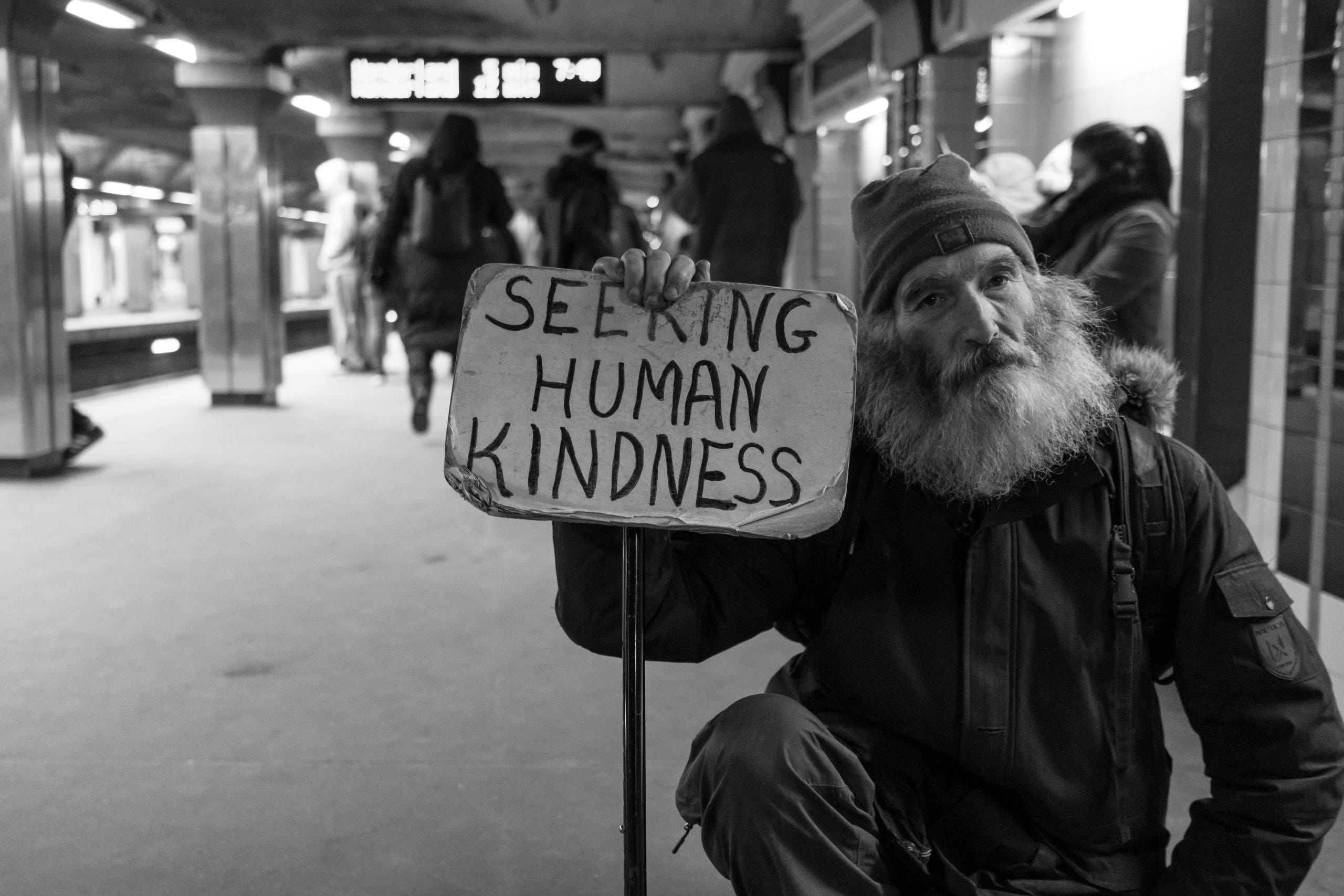
In our wildest apocalyptic-porn media, it’s always the same pattern. Humans are killed off by a superior species that we cannot outwit, outgun, or outmaneuver. The two main archetypes propagated by actors in Hollywood see non-human intelligences take over the world. Artificial intelligence and aliens both resemble non-humans being able to use things like more advanced technology, superior intellect or skill, faster coordination, or more devastating destruction to kill off or severely hinder humanity.
Our fears of this Sci-Fi hypothetical may be placed on the fact that we are almost implicitly aware that we may have done unto us what we are doing to every other species on Earth. That is, killing them off, enslaving them, caring not about their conscious lives, ruining their ecosystems, the list goes on. If any other species did this to us, we’d figure out a way to use our intelligence (said to be our greatest asset) and manipulate the situation to our advantage. Apocalyptic scenarios are simply those that we were unable to manipulate to our preferred outcome.
Let’s take a step back. Are humans really destroying the planet? Not really. The Earth as it exists in physical form will be fine, with or without us. More precisely, we are destroying the specific ecological conditions that support human civilization and general life on Earth.
What do we define as destroying? For starters, we might measure it by extinction rates, currently running at somewhere between 100 to 1,000 times the natural background rate. We might look at biomass loss. Since 1970, wildlife populations have declined by an average of 69%. We might point to habitat destruction: roughly half of the world’s habitable land is now used for agriculture, and we’ve lost approximately 80% of the world’s forests. We could measure ocean acidification, rising at a rate not seen in 300 million years, or the fact that we’ve eliminated about 90% of large fish populations.
Interestingly, we might define destruction by what happens when we stop: harpy eagles and whale populations demonstrate that when we simply leave species alone, they recover. This suggests that destruction isn’t some predestined apocalypse set in stone due to the Anthropocene. Apocalypse, strangely, is an active, ongoing choice. The moment we release the pressure of sustaining human civilization, life, as we know it, rebounds.
How do humans treat other animals and species? We fragment their habitats into isolated patches too small to sustain viable populations. We drain wetlands, clearcut forests, and plow prairies to make room for our crops and cities. We overfish the oceans until populations collapse, hunt species to extinction for sport or traditional medicine. We poison ecosystems with pesticides and industrial runoff. We introduce invasive species that outcompete native ones. We’re now altering the very chemistry of the atmosphere and oceans. The result? Die-off rates that dwarf anything in the geological record outside of the five previous mass extinctions.
We have this implicit fear that we are going to be treated like this, but we choose not to stop these speciocides. What does that say about us? Perhaps we believe the rules that apply to other species don’t apply to us. That our intelligence, our consciousness, our civilizations grant us exemption from the moral calculations we fear others might use against us. Or perhaps we simply can’t connect the abstract fear (alien invasion, robot uprising) with the concrete reality (bulldozers in the rainforest, trawlers in the ocean). The scenarios feel different, even though the underlying logic is identical: a more powerful entity eliminating a less powerful one because it can.
Why? Many reasons.
It may be because the victims of our speciocides are invisible to us. We don’t see the individual animals dying, don’t hear their distress, don’t witness the slow collapse of their populations in real time. A cow becomes a burger. Trees in an Amazonian forest become lumber. The ocean becomes a boundless resource to extract from and pollute. We’ve industrialized, processed, and sanitized destruction to the point where it happens far from our daily lives. Empathy requires proximity, and we’ve engineered maximum distance between ourselves and the consequences of our actions. This is why the alien or AI threat feels immediate and visceral in our imagination. It’s relatively easy picture ourselves as the victims and feel the fear personally.
It also could be because we’ve convinced ourselves we’re fundamentally different. We have language, culture, art, science, technology, philosophy. Surely that places us in a separate category from “mere” animals. We tell ourselves that our superior cognition justifies our dominance. We rationalize each extinction, each habitat destruction as essential for feeding people, growing the economy, for progress, whatever lie we want. But the moment we imagine a more advanced intelligence applying that same logic to us, we recoil. We want the privilege of dominance without accepting that any sufficiently advanced entity could claim the same justification for our elimination. If we do it, it’s cool. If someone else does it to us, those bastards!
Most importantly, stopping these speciocides requires massive sacrifice today for benefits we might never personally witness. This is where things get rather sticky, not even in the good way.
Consider what it would actually take to halt the sixth mass extinction. We’d need to radically transform agriculture (the largest driver of habitat destruction) which means changing what we eat, how much land we use, how we produce food. We’d need to restrict fishing, logging, mining, and development in critical habitats. We’d need to reorganize supply chains, retool industries, potentially accept lower economic growth. These translate to higher prices, fewer products, more constrained lifestyles. Would you accept no more lattes on Earth if every coffee shop said that producing lattes contributed more harm than good? Outrage would happen at every Starbucks and third-wave coffee chain. People want what they want, and taking it away from them makes them want it even more.
We also struggle with what economists call temporal discounting; the future simply matters less to us. Worse, the further out that future, the less it matters. A species going extinct in 50 years feels less urgent than one going away right now. Plus, we can figure out the 50-year speciocide later, we still have time, as the thought inevitably goes. Meanwhile, our AI and alien fears exist in a consequence-free zone. We can watch the movies, read the books, have the philosophical debates, feel the thrill of existential dread, and then go about our lives completely unchanged. These fears don’t ask us to eat less meat, drive less, consume less, cut back on lattes. They don’t threaten our jobs or raise our costs. They’re intellectually stimulating without being personally demanding. We get to feel thoughtful and concerned without actually doing anything.
Further, the actions that would prevent our own extinction at the hands of superior intelligence would feel immediately justified. If aliens appeared tomorrow, we’d mobilize every resource, make any sacrifice, accept any hardship to survive. The threat would be concrete, the timeline compressed, the collective-interest obvious. But asking people to make sacrifices now to prevent other species’ extinctions? That requires abstract thinking, long-term planning, empathy, and sacrifice that extends beyond our species.
Even if you personally decided to change — go vegan, stop flying, minimize consumption — you’re making real sacrifices while the aggregate impact remains negligible unless millions of others join you. The prisoner’s dilemma plays out at global scale. Why should I bear the cost if others won’t? At least with an alien invasion, everyone would be forced to cooperate or die. With speciocide, we can rationalize that our individual contribution to the problem is too small to matter, and our individual sacrifice won’t save anything anyway. So we don’t change a thing about our behaviour.
Perhaps worst of all, our very awareness of the problem can paradoxically become an excuse for inaction. We read the articles, share the documentaries, express concern and then feel like we’ve somehow done something. In reality, all we’ve done is acknowledge the issue. We’ve created elaborate systems for performing concern while changing nothing. We recycle our plastic bottles while the fishing industry drags nets across the ocean floor. We buy “eco-friendly” products while forests fall to make room for the palm oil in our snacks. When buying a flight, we hit a button to absorb the climate cost. Seriously! We prefer small conveniences of feeling good rather than uncomfortable sacrifices that make necessary change.
All this means is that there exists an unwillingness of humanity. Call it collective hedonic adaptation, or whatever you want. We are willing to let countless species vanish into extinction before we’re willing to inconvenience. ourselves. And as the arrogant fucking species we are, we wonder why aliens have not visited us, or why AI is not conscious yet. If you were an intelligent, sentient machine, why on Earth would you want to be a part of this planet’s dominant species? And if you were an advanced extraterrestrial, why on Earth would you want to share your knowledge and resources with a species so eager to plunder other consciousnesses? We are alone in the universe, that is certain. Not that there is not anyone else out there. We don’t know the answer to that question yet. But we are alone in our ability to care only about ourselves.
And we can’t even do that right.